|
|
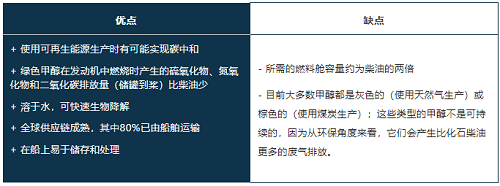
Wartsila receives an order for 150 W32 methanol engines in China in 2023Time:2024-05-14 Methanol is rising as a Marine fuel, and the market demand keeps growing. In 2023 alone, Wartsila received an order for 150 W32 methanol engines in the Chinese market. The reason for the strong demand is obvious: the increasing pressure to decarbonize the shipping industry and the tight time frame. New regulations and increasingly stringent customer requirements for green operations mean that shipowners need to reduce not only carbon dioxide emissions, but other greenhouse gases as well. Wartsila estimates that 47% of the active merchant fleet is at risk of not complying with CII requirements if operators do not take any action. Switching to green methanol is a viable way to decarbonize operations. Why will methanol become one of the main Marine fuels in the future? In the future, in addition to being more competitive than diesel in cost, methanol will also be more widely available. Methanol as Marine fuel has a perfect system system, the existing diesel fuel filling facilities can be used to fill methanol with a little reform. Although methanol itself is a colorless liquid, methanol produced by different methods and sources is often distinguished by color names: Green methanol: produced from biomass energy or captured carbon dioxide and green hydrogen Blue methanol; Produced from blue hydrogen (produced when natural gas is separated into hydrogen and carbon dioxide) combined with carbon capture technology Gray methanol; Produced from natural gas Brown methanol; Produced from coal The main advantage of methanol compared to diesel is that it produces fewer emissions of sulfur oxides, nitrogen oxides and carbon dioxide when burned as a fuel. The amount of emissions reduced depends on the load of the engine and the "color" of methanol used. Studies have shown that using gray methanol instead of heavy oil can reduce carbon dioxide emissions by 7%. When green methanol is used, carbon dioxide emissions can be reduced by up to 88%. This is precisely the appeal of green methanol as a CII compliant option. With the continuous tightening of CII regulations, ships can gradually increase the use of green methanol so that ships can meet the relevant emission requirements for years to come. Four key issues
1. Cost Although the current purchase cost of green methanol is higher than that of diesel, from the perspective of environmental regulation, ships that do not meet the CII index will be banned from operation. This means that the additional cost of using methanol not only needs to be compared to the current cost of diesel, but also needs to be considered from a more far-reaching perspective. For example, the cost of building a new ship, as well as the losses that can be incurred if a ship is forced to stop operations because it does not meet requirements. Maritime transport, which is about to join the EU emissions trading scheme, may make diesel more expensive to use, making green methanol more competitive. 2. Availability In 2020, the global Methanol industry association (Methanol Institute) released statistics that there are about 100 ports in the world that can supply methanol. The seaborne dedicated infrastructure for methanol transport is still in the early stages of development, but is growing in scale. Currently, gray methanol is more common than green methanol, but with the growing demand for low-emission fuels, the supply of green methanol is expected to increase as well. Step 3: Security Methanol dissolves in water and biodegrades quickly. From the perspective of shipboard safety, the International Maritime Organization's (IMO) MSC.1-Circ.1621- "Interim Guidelines for the Safety of Ships Using Methanol/Ethanol as Fuel" has clear regulations on the use of methanol as a Marine fuel. Wartsila has also developed safety concepts for methanol engines and their associated fuel handling and storage systems. The concept serves as an internal design guide for all ship projects that use methanol as a fuel, helping to ensure ship safety. 4. Easy to use Due to its chemical properties, methanol fuel can be refilled with only a slight modification of existing refueling facilities. Because methanol is a liquid at atmospheric pressure, it can be stored in tanks similar to conventional diesel tanks without the need for low temperature storage. In addition, most major ports have well-developed storage and handling facilities in or near them.
|